01 July 2009

Bike Improvisations

Common amendments to bikes in the metro:


Narrow wooden planks fastened between the handlebars and the seat, for people or goods to sit on.


Low-cost wire baskets, presumably made for drying dishes, attached tot he front.

30 June 2009

Leftover Homes


Empty capiz panels are pretty sad.

Walking around the Quiapo and Binondo area, you find some gems of houses that retain certain features we could very well explore for more comfortable living in these tropics. They are frequently in poor condition, but provide a sense of how urban living evolved for Manila denizens. High ceilings, large windows, boxy rooms.
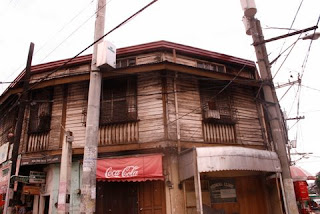

A corner house all boarded up.


Capiz panels still in place, with a Jollibee tarp marring the view, basically.

Capiz windows were made using the shell of the bivalve Placuna placenta. The latticed apprearance of window panels commonly associated with Filipino-Spanish architecture is a result of the what is a convenient and good-sized square that you can cut from hundreds of capiz shells. Naturally, these are smaller than those you would find in countries doing the whole glass windows thing at the time, where mollusk growing size was not a limiting factor.


Empty capiz panels also make me think of mosquitoes.

Just a note: I have a special interest in them windows because the house I live in is a former capiz shell factory, and the general area I live in (fairly coastal) was probably a competitive supplier of window material to the more urban Manila area.


Balustrades on an overhanging second floor.

Below the large sliding capiz and wooden windows are usually smaller sliding panels which open up into a balustrade of wood or wrought iron. These are called ventanillas, from which children can hang out and watch the street. In my own grandmother's house, I would squeeze myself through the sliding doorlets and into a wrought iron "cage" overlooking the garden, and sometimes fall asleep. The ventanilla can be left open for fresh air if you, for some reason orthe other, don't want to open the larger window.


Details on the awnings.

These practical applications are useful to think about. How much of them have been rendered useless by the pollution from cars, the loss of trees and air passageways for ventilation, and the blocking of light by taller buildings? How we are currently using our streets gives hints of hostility towards these beautiful, low-energy designs. But as long as some of these under-appreciated beauties are peeking through the boxy cement buildings, we can learn a lot just by walking around.


A carved door with an opening with iron ornamentation above, meant for ventilation in better days.

29 June 2009

(Pause)

I'll be back soon, fellows. Just sorting stuff out.

25 June 2009

Space Ship Jeepney

(A previous jeepney ceiling post can be found here.)


Retro space ship (or cheap motel)style. Shiny mirrors, a little television screen.

20 June 2009

A Suave Shoe Repairman


Preparing for a day's work-- the sign doubles as a cover for the compartment containing old shoes and more. That is obviously not Alex doing the fixing.

I finally took a photo of this repairman's stall that I often pass. The sign says:
Repair / Alex / Mr. / Swave
Shoes / Shine
Umbrella / Payong
Bags / Zipper
Water Jag
The use of the slashmark is actually pretty effective in compensating for the poor handwriting (spacing problems, perhaps). There is only one word translated into the native language (payong means umbrella), while the rest would be understandable to any Tagalog speaker. In all, it's pretty charming and straightfoward.

(Although I do wonder how the same guy repairs water "jags", and what kind of water jugs he can mend with the same tools he uses for the other goods on the list.)

This Alex fellow chose to give himself a nickname "Mr. Swabe", another way to spell "Mr. Suave". This persona infiltrated national consciousness five years ago as Parokya ni Edgar launched their 70s-inspired song (see video below), which then brought about a movie with a protagonist called Rico Suave.


(You can also find an English translation of the lyrics on this blog.)

19 June 2009

Urban Fence


This one is hard to jump over.

A wooden fence (with a bit of PVC pipe) tied together to block an entrypoint at the Magallanes jeepney dropoff area in Pasay. It is similar to, and may have been built by some of the many migrant laborers in Manila familiar with building, fences around rural homes and farms.

18 June 2009

Jeepney Cleanliness Tools


Rolled tightly and tucked above the long rearview mirror spanning the width of the driving chamber. Below it, "God Bless Our Trip".

Jeepney drivers keep an arsenal of circular cleaning rags, actually sewn from a bunch of scrap fabric. I've lately been observing how they store these while not in use.


Like cinnamon rolls, they look even more fantastic when different colored cloth is used.


Just four rags, and just sort of put on top of the mirror, near a Jesus sticker.

17 June 2009

Byproduct

Using agricultural waste material as protection while shipping.


Maximizing use of sack by providing a "hat" made of dried sweet potato vines.


Crate of bananas protected by (under the rope) pieces of banana trunk.

16 June 2009

The Beetles


Where are we? What are we doing here?

I was walking down Asuncion and, beside the jackfruit vendors, spotted moving nuggets, which turned out to be salagubang or scarab beetles.


Two plastic baskets filled with crunchy crawlies.


They eat leaves.

The lady selling seemed almost like a circus trainer, making the insects crawl up her arm and replacing them on the surface of her container, putting a few back into the bed of banana leaves. She said they were harvested in Batangas, where they are abundant in agricultural areas.


Bling bling.

"Adobo, with vinegar, soy sauce and garlic, or just gisa (sauteed)", the lady answered in Tagalog, when asked how they are prepared. Personally, I'd like to see meat-eaters begin to consume more of these non-industrial, harvested sort of things.

Popular Posts